
Over the past 30+ years, I have become a master of avoidance. Not avoiding my responsibilities and errands for my home, not avoiding friendships or family, and certainly not avoiding my responsibilities to work. My mastery has become avoiding my truths, and this has come at a cost.
Avoidance didn’t feel like a choice I made; rather, the result of relationships that overpowered me, love I believed others deserved, and at times lack of financial stability requiring difficult choices. Plus, there are traumas I truly don’t remember as the underlying issue behind it all. There was simply no time to consider what I was avoiding in myself.
Realizations in my late 20s happened. But it has still taken over 20 years to do something about it.
Exploring the Fawn State
Several years ago, I heard the word “fawning” as a descriptor in the trauma cycle to accompany fight, flight, and freeze. It wasn’t given to me in true context, so I built my own definition around the fawns I see crossing our property – dependent and cautious. I incorrectly assumed fawning from and within trauma was a passive and lacking independence state.
Boy was I wrong.
The Fawn Response was initially defined and explored by Licensed Marriage and Family psychotherapist Pete Walker. In the early 2000s Walker coined the term to define extreme situations of people-pleasing and codependency in trauma survivors where safety represented behaviors of serving, mirroring, or being agreeable with the demands of a threatening situation. Explaining these behaviors as fawning were the topic of his 2013 bestseller, “Complex PTSD: From Surviving to Thriving.”
While not all behaviors describe every situation, the primary characteristics of someone who has found safety in the fawn response are:
- Extreme People-Pleasing. This goes beyond wanting to make others happy. It is destructive in prioritizing the happiness and desires of others at the cost of your needs.
- Difficulty Saying “No”. Drawing boundaries may give your skin the “heebie-jeebies.” A ‘no’ to another can elicit fear responses of losing a relationship, making someone unhappy, or worrying your boundaries will make someone disapprove of you.
- Hyper-Attunement to Moods. This can be a place where you obsess over slight adjustments in people’s smile, tone – both verbal and text message “implied” tones, and your responsibility for any of these shifts.
- Excess Apologizing. You may be driven to apologize for literally everything, whether a mistake was made or not.
- Feeling Responsible for Others. This goes into a superhero capacity where you believe you are personally accountable for how someone may feel, react, or behave.
- Loss of Identity. Absorbing your believed role so deeply that you lack identity when you are alone and base your entire self-worth on the values you give to others.
- Conflict Avoidance. Your body will tell you when you sit in this space. Even the thought of conflict can put your tummy into a spiral and you will make Herculean efforts to suppress your feelings to avoid potential arguments, disapproval, or anger.
- Guilt and Shame. When you are unable to be helpful, supportive, or take charge of a situation for another, you feel deep guilt and disapproval of yourself.
This isn’t a diagnosis and certainly nothing to be fixed by a pill. Fawning is just one of the four ways trauma can live in your body. And, if you are at all like me, it just may be the answer you’ve been searching for.
Finding the Fawn in Me
Over the past 30+ years, I’ve experienced small and extraordinarily insightful periods of progress and defined expectations for my self-improvement. With only a few exceptions, these gifts of direction got swept away by the busyness of life and the expectations I placed on myself. Attending therapy, practicing yoga, and doing things simply for my own enjoyment were quickly kicked aside by whatever excuse I chose to believe. The reality was the investment in myself simply took too much effort. Investing in others was easy and brought me joy.
Seems backwards, doesn’t it?
It did, until a quiet conversation five months ago at a holistic wellness fair with author and Rapid Transformational Therapy Hypnosis Coach, Danelle Land, implanted the concept of my fawning due to complex PTSD. Putting my focus on the love and support, encouragement, attendance, and follow-through to enable others felt SAFE to me. There was no disruption. There was no uncertainty. There was no digging deeply into that pit in between my lower rib cage that I worked so hard to avoid.
Since that meeting, I did nothing. I did nothing, until I could do nothing no more. Over the past 6 weeks, it has become abundantly clear that my passionate work and travel schedule has taken a toll on my mental health. Rapid weight gain, depressive episodes, extraordinarily low self-confidence, and nightmares plagued me.
It was time to look my fawn in the eyes.
Addressing the Fawn in ME
I finally committed that I needed to address the reasons behind my fawn trauma response instead of doing what I’ve always done - powering through life.
Friday, September 18, 2026 began a “MEntal Health” commitment to explore and activate new ways of processing, acting, and speaking. This commitment to ME had to start at the beginning – a place I’ve held security and measurements of my accomplishments:
The to-do list.
I knew this had to be a loose plan for me to be successful. I know myself well enough that if I were to repeatedly schedule in mental health activities on the calendar, it would quickly become another box to check, resentment will form, and the things to do to support my house, my husband, my children, or my job would take priority immediately. I needed to create an intentional space where I don’t judge myself for actions taken or not taken.
I'm making space in my mind and schedule to consider:
- Stretch and take three deep breaths each morning before getting out of bed.
- Revisit to past interventions that worked, I just didn’t stick with (narrative trauma writing was key for me!)
- Regular journaling
- Reading for pleasure
- Walking with the dogs
- Weekly therapy
- Completing tasks that have been causing me sensory dysregulation (plus decreasing my crazy long to-do list)
- Exploring treatment options offering possible healing - including Reiki, hypnosis, sound emersion, red lights, and more
I have lived with an unintentional boundary against establishing and maintaining a routine (and its automatic translation to safety) for myself, yet I can perform regularly for others without distress. This is the discomfort I am trying to disrupt during my MEntal Health journey. I hope to document and share what interests me, what provides relief, what I abandoned, and what has stuck.
Where Exploration Begins
This journey is starting with three narratives:
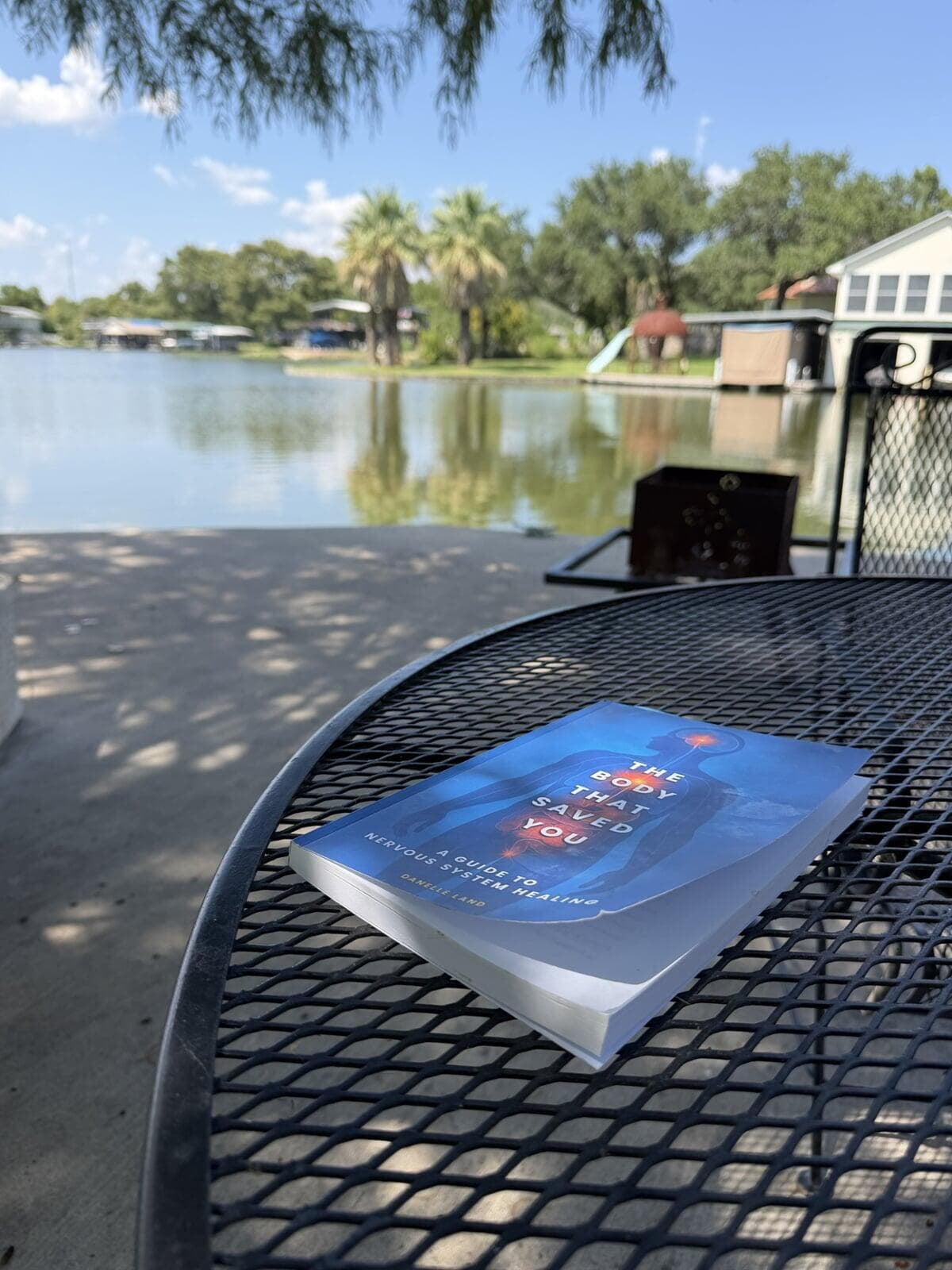
The Body That Saved You
The conversation with Danelle Land inspired me, so I picked up her book “The Body that Saved You – A Guide to Nervous System Healing.” Because, let’s be honest, my nervous system has been dysregulated since I was a baby.
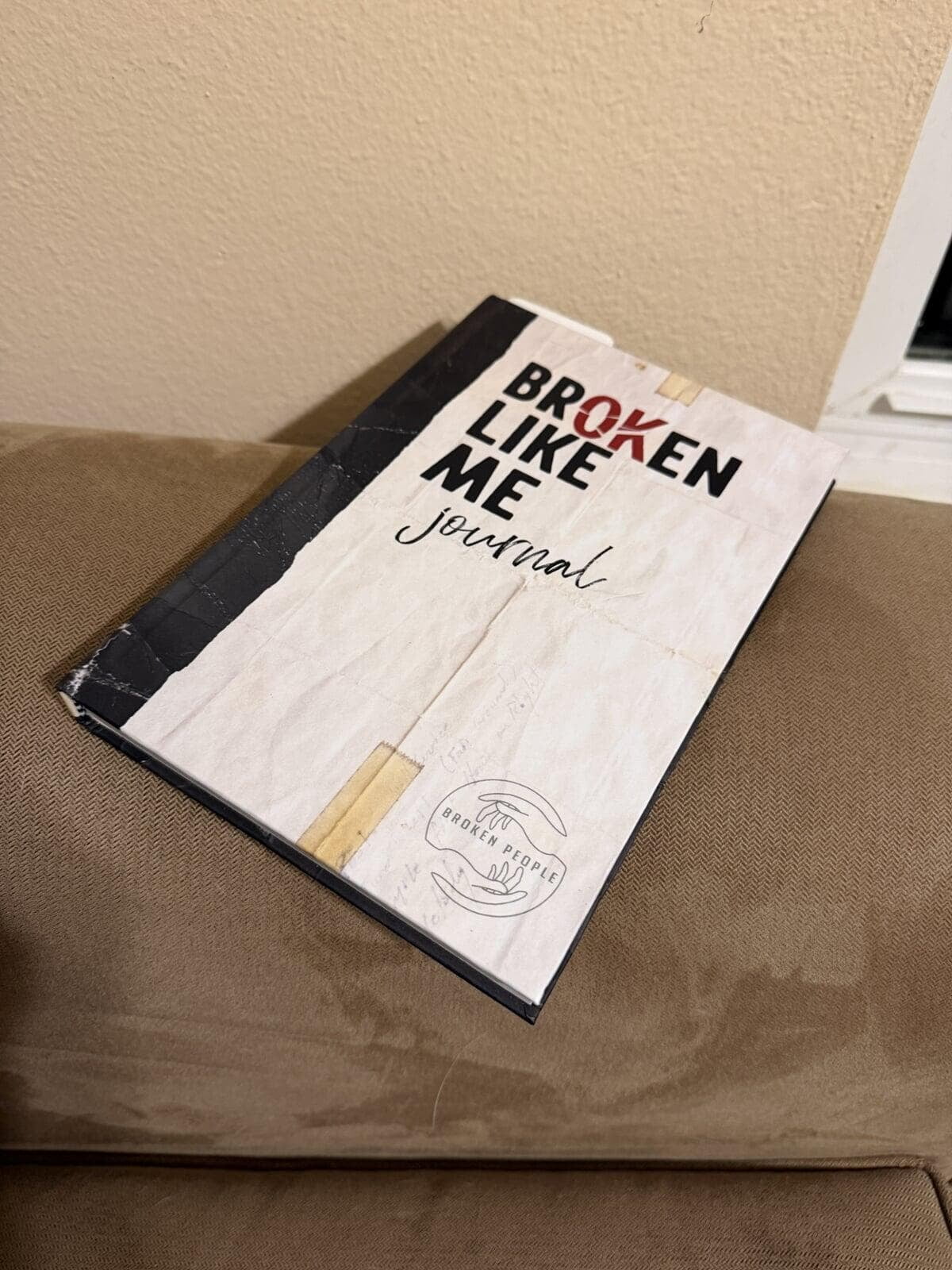
Broken Like Me
A copy of the “Broken Like Me” journal from Joseph Edward Reid because I don’t believe admitting we’re broken in any way indicates a flaw, a negative perception of ourselves, or a future destiny. I like how on some days I’m free to write a sentence and if I’m called to write more there is space for that too.

To Kill a Mockingbird
The worn softcover of “To Kill a Mockingbird” given to me by one of my daughters. This read represents almost a decade of promises to myself to read the classics – classics that despite my superior suburban Cleveland, Ohio education were not a part of literature classes.
Putting a Leash on my Fawn and Walking Together
My fawning exists largely in a detrimental desire to appease others, find safety in other people’s happiness, and define myself by what I complete for others or off a list that gives me perceived value. It’s important to me to continue acknowledging that while these upcoming weeks are intentionally reserved for me, my passion to build Get Support Together and support others along their mental health journeys I do not feel is me fawning. Instead, it is my purpose and my own road to self-exploration. And why, you may ask? Because when I needed the help, deeply needed the help, I faced a brick wall. So, your journey is my journey too.
So, here I go. I’m starting with narrative therapy, which has been extremely helpful for me in the past. No artificial intelligence. No Google summaries. Just me and my creative voice combined with my soul. The little girl in me is ready for some peace.
Welcome along.